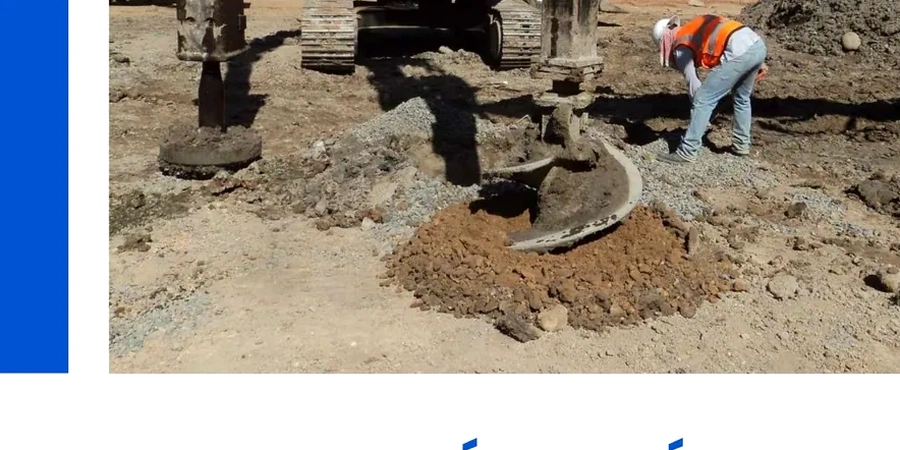
Ground improvement in Birmingham, Alabama represents a critical branch of geotechnical engineering focused on modifying in-situ soil properties to support safe, durable construction. This category encompasses a suite of specialized techniques—from mechanical densification to chemical stabilization—designed to increase bearing capacity, reduce settlement, and mitigate liquefaction risks. In Birmingham's mixed geologic setting, where residual soils from weathered shale and limestone intermingle with alluvial deposits in valley floors, the need for tailored ground improvement cannot be overstated. Without proper treatment, expansive clays and loose valley fills can compromise foundations, roadways, and underground utilities, leading to costly repairs and safety hazards. Understanding the full spectrum of improvement methods ensures engineers and developers select the most effective, economical solution for each unique site.
Birmingham's geology is shaped by the Appalachian foothills, characterized by the Valley and Ridge physiographic province. The area features alternating layers of shale, sandstone, and limestone, with overlying residual soils that often contain expansive smectite clays. These clays undergo significant volume changes with moisture fluctuations, exerting pressures up to 15,000 psf on structures. Additionally, alluvial and colluvial deposits in valleys like those along the Cahaba River and Village Creek present loose, saturated sands and silts susceptible to settlement and seismic-induced liquefaction per the United States Geological Survey seismic hazard maps. Karst features in limestone zones add another layer of complexity, where sinkholes and solution cavities can develop. These conditions demand advanced analysis, such as unsaturated soil analysis, to predict behavior under varying moisture contents and design appropriate mitigation strategies.
Regulatory compliance in Birmingham follows the International Building Code (IBC) as adopted by the State of Alabama, supplemented by the City of Birmingham's local amendments and the Alabama Department of Environmental Management (ADEM) standards. The IBC mandates that foundations be designed to resist differential settlement and expansive soil effects, referencing ASCE 7 for load combinations and geotechnical investigation requirements. For deep improvement works like deep soil mixing or jet grouting design, engineers must adhere to FHWA design guidelines, particularly FHWA-HIF-14-001 for deep mixing methods, ensuring quality control through coring and in-situ testing. Environmental regulations under the Clean Water Act also govern grouting near waterways to prevent contamination, with ADEM requiring permits for any injection that may affect groundwater. These frameworks ensure that improvement projects not only meet structural performance criteria but also protect public health and natural resources.
Projects across Birmingham routinely require ground improvement to address site-specific challenges. Commercial developments in the Riverchase and Hoover areas often encounter residual expansive clays, necessitating stone column design to provide drainage and reinforcement beneath large-footprint warehouses. Transportation infrastructure, including I-65 widening and bridge approaches, frequently relies on dynamic compaction design to densify loose fills and reduce post-construction settlement. Industrial facilities with heavy tank loads or sensitive equipment benefit from grouting design to fill voids and strengthen fractured bedrock, while residential subdivisions on sloping terrain use geotechnical drainage design to control groundwater and stabilize slopes. In flood-prone zones near the Cahaba River, prefabricated vertical drain systems accelerate consolidation of soft clays, enabling timely construction on otherwise marginal land. Each technique addresses a distinct failure mechanism, and the selection process hinges on thorough subsurface characterization and performance-based design.
Indicators include visible cracks in existing structures, uneven floors, sticking doors, or undulating pavement, often pointing to expansive clay movement or fill settlement. Geotechnical borings revealing loose sands, soft clays, or high plasticity index soils above 25 also signal a need. In Birmingham's valley areas, standing water after rains can indicate poor drainage requiring improvement before construction.
Birmingham's expansive residual clays from shale weathering demand methods that mitigate volume change, such as moisture conditioning or chemical stabilization. Loose alluvial sands in valley floors respond well to densification techniques like dynamic compaction, while karst-influenced limestone zones often require grouting to fill voids. The choice hinges on plasticity index, grain size distribution, and depth to bedrock identified during site investigation.
Projects must comply with the Alabama-adopted International Building Code, which references ASCE 7 for geotechnical design and requires bearing capacity verification. For grouting or deep mixing, FHWA design manuals apply, and the Alabama Department of Environmental Management may require permits if groundwater is impacted. City of Birmingham building officials enforce these standards through plan review and inspection.
Duration varies by method and site size. Dynamic compaction for a 5-acre site may complete in two to three weeks, while stone column installation might take four to six weeks including mobilization. Deep soil mixing or jet grouting can extend longer if depths exceed 40 feet or access is constrained. Weather delays are common in winter due to rainfall affecting clay workability.