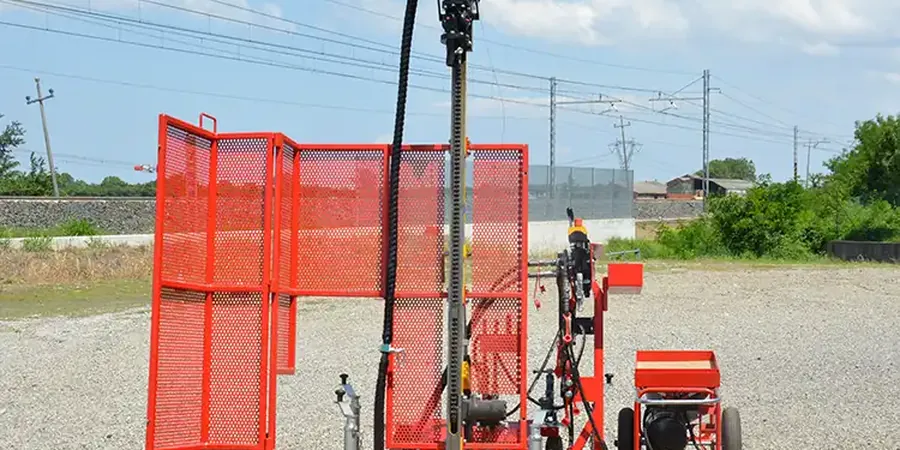
Subsurface investigation forms the bedrock of successful construction and civil engineering projects in Birmingham, Alabama. This category encompasses the systematic evaluation of soil, rock, and groundwater conditions through direct and indirect methods, providing essential data that shapes foundation design, earthwork strategies, and risk mitigation. In a city defined by complex geology and a long history of development, understanding what lies beneath the surface is not merely a regulatory checkbox but a fundamental engineering necessity.
Birmingham's geological setting presents unique challenges that demand thorough investigation. The city straddles the boundary between the Valley and Ridge province and the Cumberland Plateau, resulting in highly variable subsurface conditions. Bedrock can be encountered at shallow depths in many areas, while other zones contain deep residual soils formed from the weathering of limestone, shale, and sandstone. Sinkholes and karst features, associated with the underlying Bangor Limestone and other carbonate formations, pose significant geohazards that must be identified early. This variability means that a one-size-fits-all approach is rarely appropriate, and site-specific data is paramount.
Local regulations and national standards govern how investigations are conducted and reported. The International Building Code, adopted by the City of Birmingham, mandates that foundation designs be based on adequate geotechnical data. The Alabama Board of Licensure for Professional Engineers and Land Surveyors requires that such work be performed under the responsible charge of a licensed Professional Engineer. ASTM International standards, such as ASTM D1586 for the Standard Penetration Test (SPT) and ASTM D5778 for the Cone Penetration Test (CPT), define the procedures that ensure data reliability and repeatability. Adherence to these norms protects public safety and limits liability for developers and owners.
A wide spectrum of projects in the Birmingham area relies on these investigation services. High-rise developments in the city center require deep borings to characterize the rock profile for drilled shaft foundations. Industrial facilities and warehouses need precise settlement analyses based on consolidation testing of compressible alluvial soils along Village Creek or Valley Creek. Roadway expansions by the Alabama Department of Transportation demand continuous CPT soundings for pavement design and embankment stability. Even residential builders on sloped lots in areas like Vestavia Hills or Hoover benefit from exploratory test pits to visually assess shallow rock, groundwater seeps, and the potential for slope instability before construction begins.
A geotechnical investigation is required for virtually any significant construction project under the adopted International Building Code. The City of Birmingham mandates that foundation design be based on soil and rock data specific to the site. This applies to commercial buildings, multifamily residences, infrastructure, and any structure where public safety is a concern. The scope must be sufficient to evaluate bearing capacity, settlement, and lateral earth pressures.
The required depth of investigation is not a fixed number but is determined by the proposed foundation type and anticipated stress bulb. Borings or soundings must extend deep enough to characterize all strata that will influence foundation performance, typically to at least twice the foundation width below the bearing elevation. In Birmingham's karst terrain, investigations often go deeper to verify rock competency and check for voids.
The most critical hazards revealed by subsurface investigations in Birmingham are karst-related features, including sinkholes, solution cavities, and pinnacled rock surfaces. Expansive clays derived from weathered shale are another concern. Other common findings include uncontrolled fill on redeveloped sites, shallow groundwater in valleys, and slope instability on hillsides. Identifying these early is essential to avoid costly construction delays and failures.
An SPT boring uses a split-spoon sampler driven by a hammer to recover a disturbed soil sample at discrete intervals, providing a direct visual record and an N-value for strength. A CPT sounding pushes an instrumented cone continuously into the ground, measuring tip resistance and sleeve friction to infer soil type and properties in a nearly continuous profile. CPT is faster and eliminates sampling disturbance but does not retrieve a physical sample.