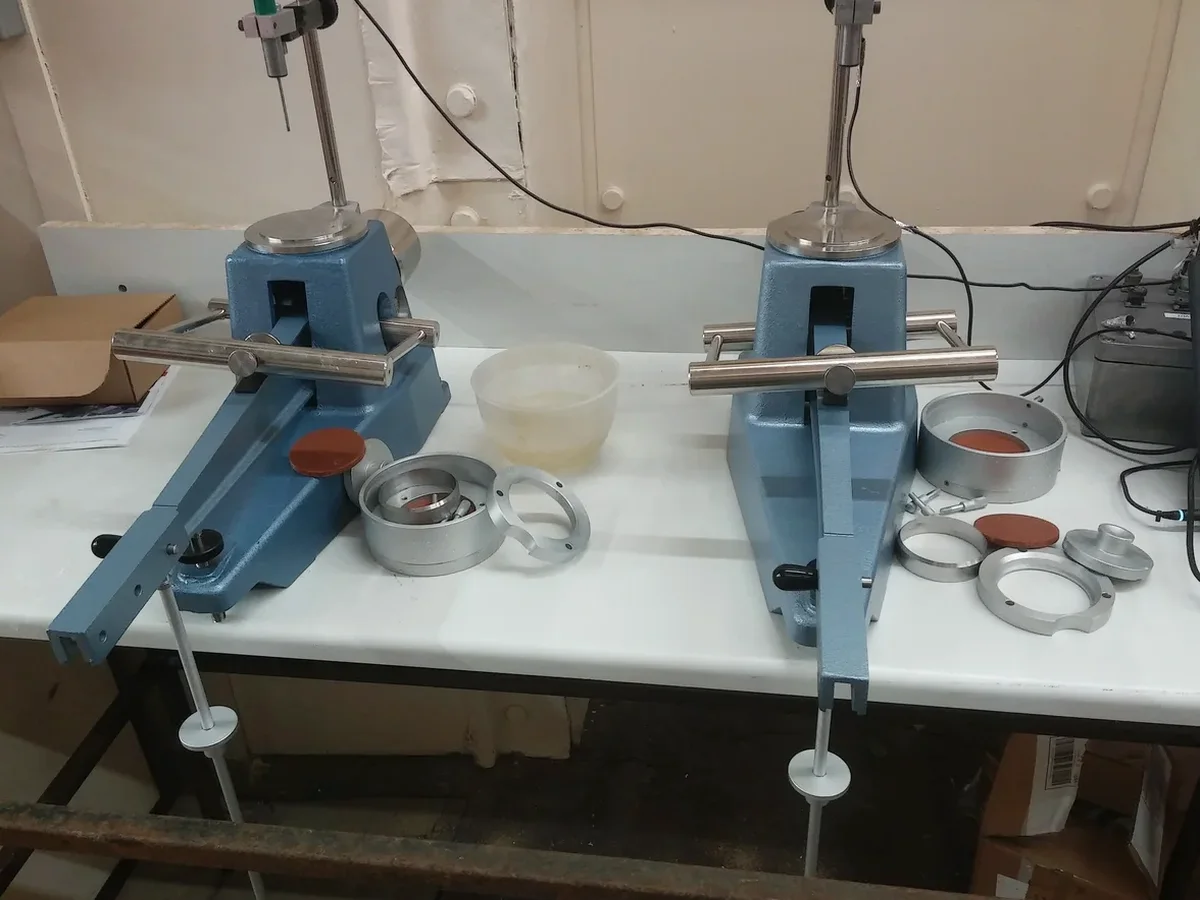
Geotechnical laboratory testing in Birmingham, Alabama, forms the backbone of safe and economical civil engineering design across the region. This category encompasses a comprehensive suite of soil and rock testing procedures that quantify the physical, mechanical, and hydraulic properties of subsurface materials. From preliminary site investigations to construction quality control, these tests provide the empirical data engineers need to model ground behavior, size foundations, assess slope stability, and design earth retaining systems. In a city where residual soils dominate the landscape, laboratory characterization is not merely a regulatory checkbox but an essential tool for managing geological risk and optimizing structural performance.
Birmingham's geology is uniquely challenging, shaped by the folded and faulted sedimentary rocks of the Valley and Ridge physiographic province. The weathering of shale, sandstone, and limestone over millennia has produced thick blankets of residual soil whose properties can vary dramatically over short distances. These soils often retain the fabric of the parent rock while exhibiting a degree of weathering that reduces strength and increases compressibility. Understanding this transitional behavior requires specialized testing protocols, such as those applied in residual soil characterization, to identify relic structures, quantify void ratios, and assess sensitivity to moisture changes. The presence of expansive clays derived from shale weathering further complicates construction, making laboratory index testing indispensable for predicting volume change potential.
Laboratory testing programs in Birmingham must comply with nationally recognized standards, primarily those published by ASTM International and AASHTO. ASTM D2216 governs moisture content determination, ASTM D4318 defines Atterberg limits procedures, and ASTM D2435 specifies incremental oedometer consolidation testing. For strength assessment, ASTM D2166 covers unconfined compression test (UCS) methods, while ASTM D3080 outlines the direct shear test for drained shear strength parameters. The Alabama Department of Transportation (ALDOT) supplements these with its own specifications, particularly for pavement-related testing such as the laboratory CBR test, which must follow AASHTO T 193 for subgrade and base course evaluation. Adherence to these standards ensures data comparability, legal defensibility, and acceptance by local regulatory authorities.
The types of projects requiring comprehensive laboratory testing in the Birmingham metro area are diverse. High-rise structures in the downtown business district demand consolidation and strength testing to design deep foundations that can transfer loads through compressible residual soils to competent bedrock. Transportation infrastructure, including expansions of I-65 and I-459 corridors, relies heavily on CBR and permeability testing for pavement design and drainage analysis. Industrial facilities, particularly those in the steel and manufacturing sectors concentrated north of the city, require specialized soil mechanics studies to support heavy equipment foundations and manage potential contamination migration. Slope stabilization along Red Mountain and other steep terrain necessitates direct shear and triaxial testing to evaluate long-term stability under varying groundwater conditions.
Geotechnical laboratory testing quantifies soil and rock properties—such as strength, compressibility, and permeability—that directly influence foundation design, slope stability, and earthwork specifications. In Birmingham's residual soils, these tests reveal weathering effects and expansive clay behavior that cannot be reliably assessed through field observation alone, ensuring structures perform safely over their design life.
Key ASTM standards include D4318 for Atterberg limits, D2435 for consolidation testing, D2166 for unconfined compressive strength, D3080 for direct shear, and D5084 for permeability. AASHTO T 193 governs CBR testing for ALDOT projects. These standards define specimen preparation, test procedures, and reporting requirements accepted by all Alabama regulatory agencies.
Birmingham's residual soils, formed from weathered shale, sandstone, and limestone, often retain parent rock fabric while exhibiting reduced strength and increased compressibility. This necessitates testing programs that include moisture content, Atterberg limits, consolidation, and shear strength tests to characterize transitional behavior, identify expansive clays, and evaluate potential for settlement or slope failure.
Laboratory CBR tests are typically mandated for roadway, parking lot, and airfield pavement design where ALDOT specifications apply. The test evaluates the bearing capacity of subgrade soils and aggregate base materials, directly informing pavement thickness design. ALDOT requires CBR testing per AASHTO T 193 for all state-funded transportation projects and is commonly specified for commercial site development.